
New Moraea species discovered in Mpumalanga
A tiny wildflower discovered in Mpumalanga has just been declared a brand-new species after more than 30 years of confusion. Moraea goldmanniorum is rare, delicate, and only flowers for a few hours each day, proving that the Mpumalanga’s surrounding landscapes still hold remarkable secrets.
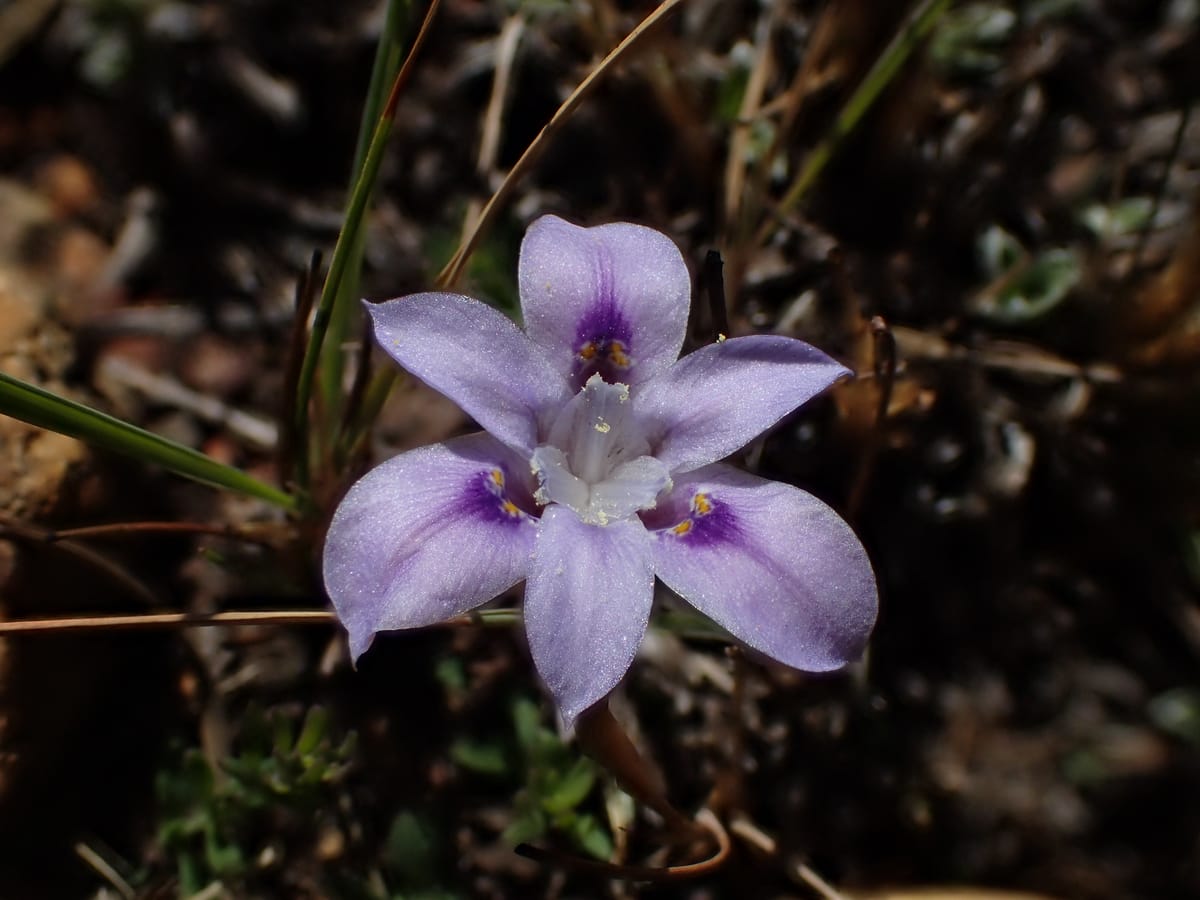
A delicate wildflower found in Mpumalanga has officially been recognised as a new species, bringing an end to more than 30 years of confusion among botanists.
Now named Moraea goldmanniorum, the plant belongs to the Iris family (Iridaceae) that was discovered in Mpumalanga, and was long mistaken for a related species found far to the north, stretching from the Chimanimani Mountains into East Africa. Its formal identification highlights both the richness of South Africa’s plant biodiversity and the importance of continued field research.
The species name honours botanists Peter Goldblatt and John Manning, whose extensive work on the Iris family has helped both scientists and amateur botanists better understand and identify these plants through research and widely used wildflower guides.
The discovery itself came about unexpectedly. According to Kevin Balkwill, emeritus professor at the University of the Witwatersrand, the plant was encountered during a search for the rare succulent Brachystelma stellatum on the slopes of Mount Anderson, between Mashishing (Lydenburg) and Sabie.
“We stumbled upon a tiny, unusual wildflower that didn't quite fit the local records,” said Wits University School of Animal Plant and Environmental Sciences emeritus Prof Kevin Balkwill. “At first glance, the plant’s broad, petal-like centres suggested it might be a Wild Iris (Dietes), but closer inspection revealed something entirely different.”
Working alongside Delia Oosthuizen, curator of the Barberton Mountainlands Herbarium, the team identified a crucial distinguishing feature beneath the soil. Unlike Dietes, which grow from rhizomes, this plant developed from a corm, a bulb-like structure typical of the genus Moraea, commonly known as “Butterfly Irises”.
First described in 1758, the Moraea genus now includes around 234 recognised species. While the Western Cape remains its primary centre of diversity, secondary concentrations occur along the Great Escarpment, including parts of Mpumalanga and Limpopo.
The newly identified Moraea goldmanniorum differs in several key ways from Moraea thomsonii, the species it was previously confused with. It is generally smaller, with shorter stems and leaves, fewer flowering branches, and more compact blooms. Subtle but important differences are also found in the flower markings and structure. In this Mpumalanga species, nectar-guiding markings appear only on the outer tepals, while in Moraea thomsonii they occur on both inner and outer tepals.
There are further distinctions in the reproductive structures. The style branches of Moraea goldmanniorum are broader, triangular, and lie flat against the petals, unlike the narrower, more upright structures seen in its northern relative.
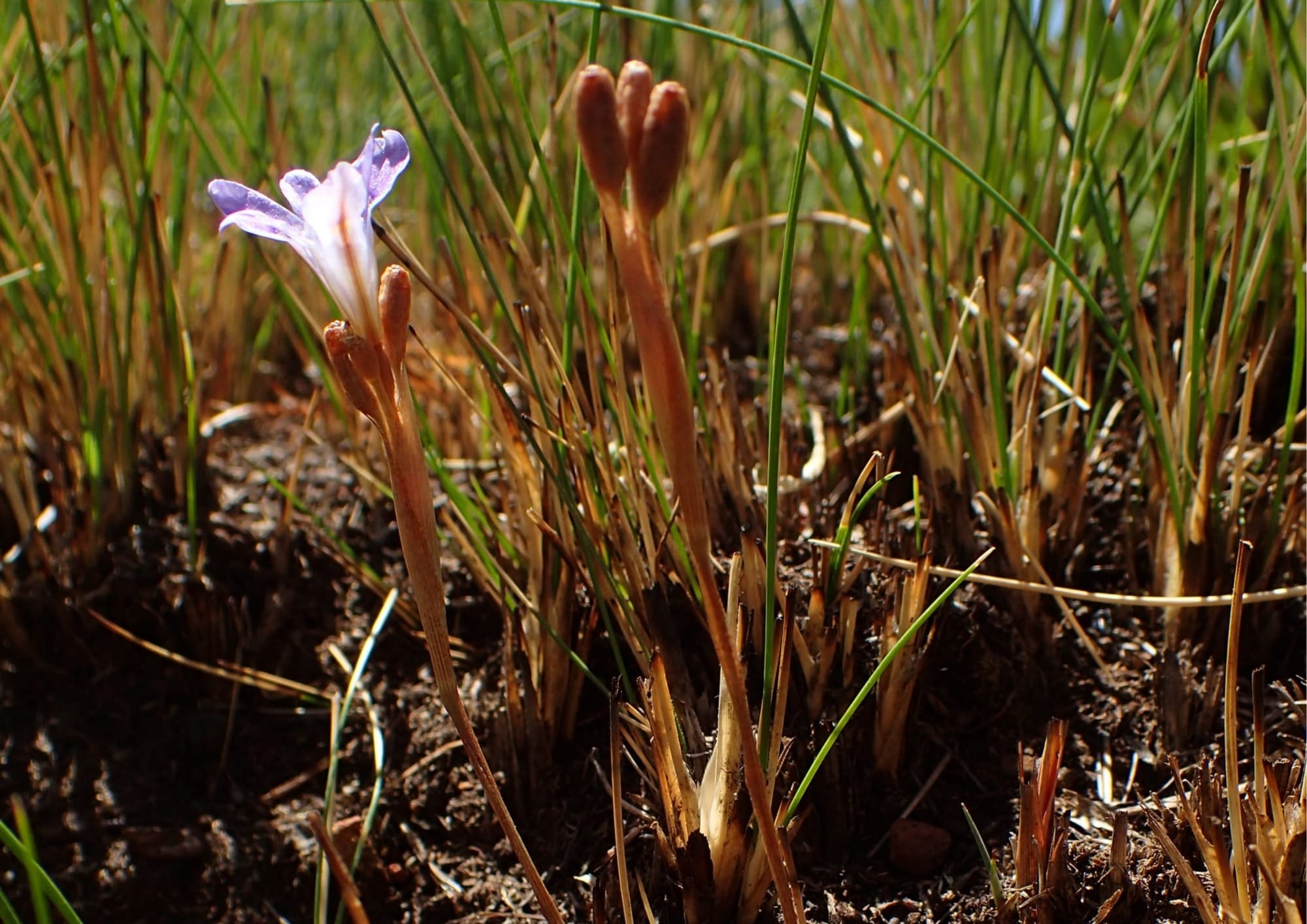
Identifying Moraea species presents a particular challenge to botanists. The flowers are complex and three-dimensional, appearing very different depending on the viewing angle. This makes accurate documentation difficult, especially since herbarium specimens, created by pressing and drying plants, often fail to capture the full structure of the blooms. As a result, researchers must rely heavily on vegetative features such as leaves and stems, which are less visually striking and not always well photographed.
Adding to the difficulty, the flowers of Moraea goldmanniorum are short-lived. They open only in the late afternoon and collapse by dusk, leaving a narrow window for observation.
Oosthuizen noted that the species grows to about 200 mm tall and flowers in spring. “You have to be at the right place at the right time to observe them,” she said, adding that years of monitoring and comparison with related species and herbarium specimens were required to confirm its identity.
The formal description of the species has now been published in the South African Journal of Botany.
Moraea goldmanniorum is currently known from a limited high-altitude grassland area of approximately 40 square kilometres in Mpumalanga. Due to its restricted range and specialised habitat, it has been classified as Endangered.
The discovery serves as a reminder that even in well-studied regions, new species can still be found, sometimes hidden in plain sight.



Comments ()