
From fear to fascination, a lifelong love affair with elephants
Today, on World Elephant Day, I find myself thinking not only about the elephants I have encountered throughout my life, but also about the people who dedicate their lives to protecting them.
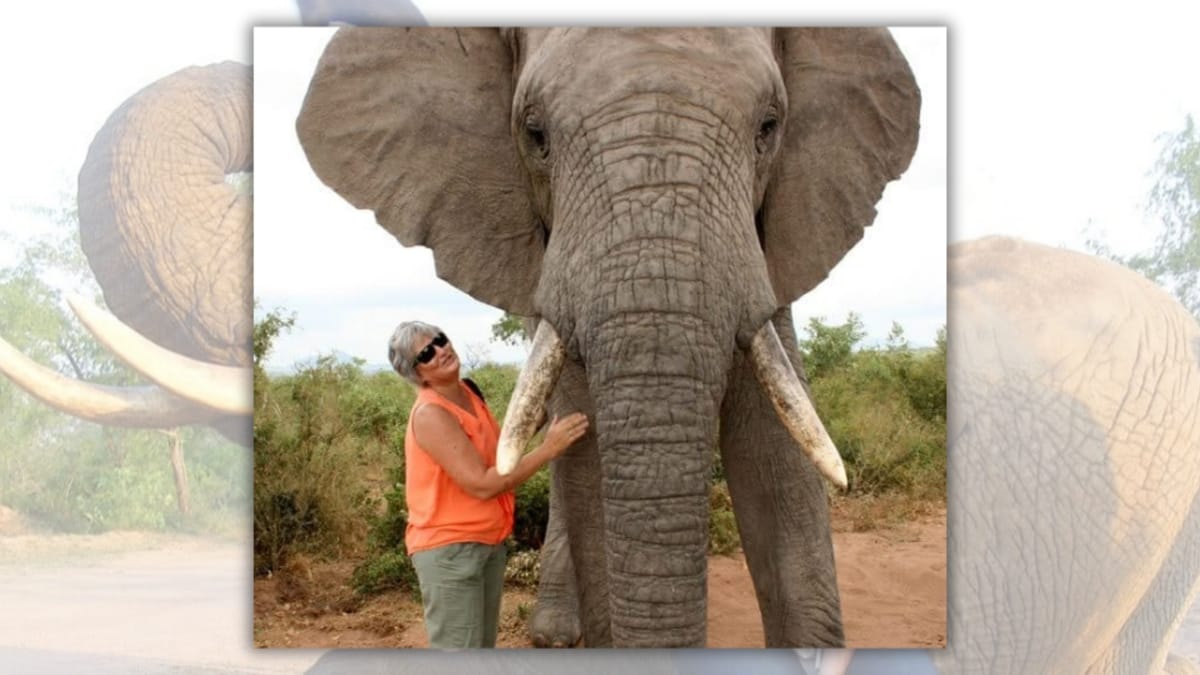
There are animals we admire, animals we respect and then there are those that somehow find a permanent place in our hearts. For me, that animal is the elephant. It may seem strange, considering that I was once absolutely terrified of them.
Growing up near the Kruger National Park, elephants were very much part of my childhood. My father loved nature and the Kruger, and because we lived close enough to visit regularly, family trips into the park were a familiar part of life.
I had some frighteningly close encounters with elephants in those early years. Close enough to understand that this enormous animal deserved a very healthy dose of respect. At the time, however, there was little romance in being confronted by several tonnes of grey, trumpeting muscle. I was terrified of them, and quite honestly, I had every reason to be.
Somewhere along the way, though, everything changed.
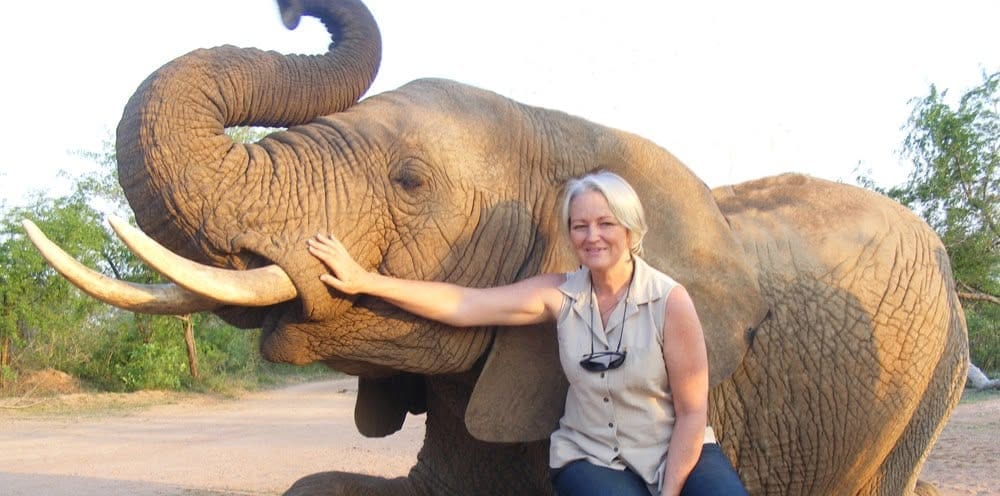
It happened at KwaMadwala, when I was given the opportunity, as the Barberton Times editor at that time, to experience elephants at close quarters. Suddenly, instead of seeing an enormous and potentially frightening animal, I began to see the creature behind the size.
I looked into those small, intelligent eyes framed by impossibly long eyelashes. I touched that rough, remarkably sensitive trunk. I began to understand their gentleness and curiosity. Eventually, I even had the opportunity to ride on one. I was completely smitten.
From then on, I wanted to know everything I could about them. I read every book I could get my hands on, fascinated by their intelligence, their emotions and their extraordinary social lives. The more I learned, the more I realised that elephants are not simply big animals wandering through the bush. They have an intricate social structure, strong family bonds and a remarkable way of communicating with one another.
They communicate through sound, touch and body language, but they can also communicate through vibrations travelling through the ground. Those enormous feet are far more than something that carries their immense bodies. They can detect and send seismic signals, allowing elephants to communicate over considerable distances.
Then there is the matriarch. She is the keeper of knowledge, experience and memory. She knows where water can be found, where food is plentiful and which routes are safe. She carries the collective memory of the herd and, over many years, passes that knowledge on to the younger generation. Watching the relationship between a matriarch and the young females who will eventually help lead the herd is a remarkable lesson in family, leadership and survival.

Reading Lawrence Anthony's The Elephant Whisperer deepened my fascination even further. His experiences with a herd of rescued elephants demonstrated just how complex, emotional and perceptive these animals can be. They were not simply creatures responding to instinct. They formed relationships, remembered people and places, displayed trust and grief, and developed bonds that are difficult to explain without acknowledging their extraordinary intelligence.
My own elephant journey has continued throughout the years, with some experiences considerably more frightening than others. There have been moments when I have found myself far too close to an elephant and wondered whether my next breath might be my last. Those encounters certainly reminded me that, no matter how much we love them, elephants remain wild animals and should always be treated with respect.
Then came another unforgettable experience last December in Namibia. We set out on foot in search of the legendary desert elephants. There is something profoundly humbling about being on foot in the African wilderness, knowing that somewhere ahead of you are elephants that have adapted to one of the harshest environments imaginable. Finding them, watching them and being in their presence was an experience I will never forget.
Perhaps that is what makes elephants so special to me. They represent so much of what I love about Africa: wildness, family, resilience, intelligence and an ancient connection with the land.
Today, on World Elephant Day, I find myself thinking not only about the elephants I have encountered throughout my life, but also about the people who dedicate their lives to protecting them. Rangers, conservationists, researchers, wildlife carers, guides and countless others work tirelessly to ensure that these magnificent animals have a future. Their work is often difficult, dangerous and largely unseen, yet it is essential.
Ultimately, this is not just about whether we get to see elephants. It is about whether our children, grandchildren and future generations will get that same privilege. Will they still be able to stand quietly beneath an African sky and watch a herd move through the bush? Will they hear the deep rumble of elephants communicating across the landscape? Will they see a matriarch leading her family towards water, with generations following behind her? Will they ever experience the extraordinary feeling of standing in the presence of an animal that has walked this earth for millions of years? I certainly hope so.


My journey with elephants began with fear. It became fascination, then respect and eventually something very close to love. I could probably fill an entire book with my elephant stories, including the encounters that scared the living daylights out of me. Perhaps one day I will. For today, though, I simply want to celebrate these magnificent gentle giants and the people who fight to protect them.
May we never take their presence in Africa for granted. May our children and grandchildren still have the privilege of looking into those small, intelligent eyes many years from now. Happy International Elephant Day to the animal that taught me that sometimes the things we fear most can become the things we love most.
𝓛𝔂𝓷𝓮𝓽𝓽𝓮.
 Mariana Balt
 Naomi Roebert
 Liz Thorne
 Anchen Coetzee




Comments ()